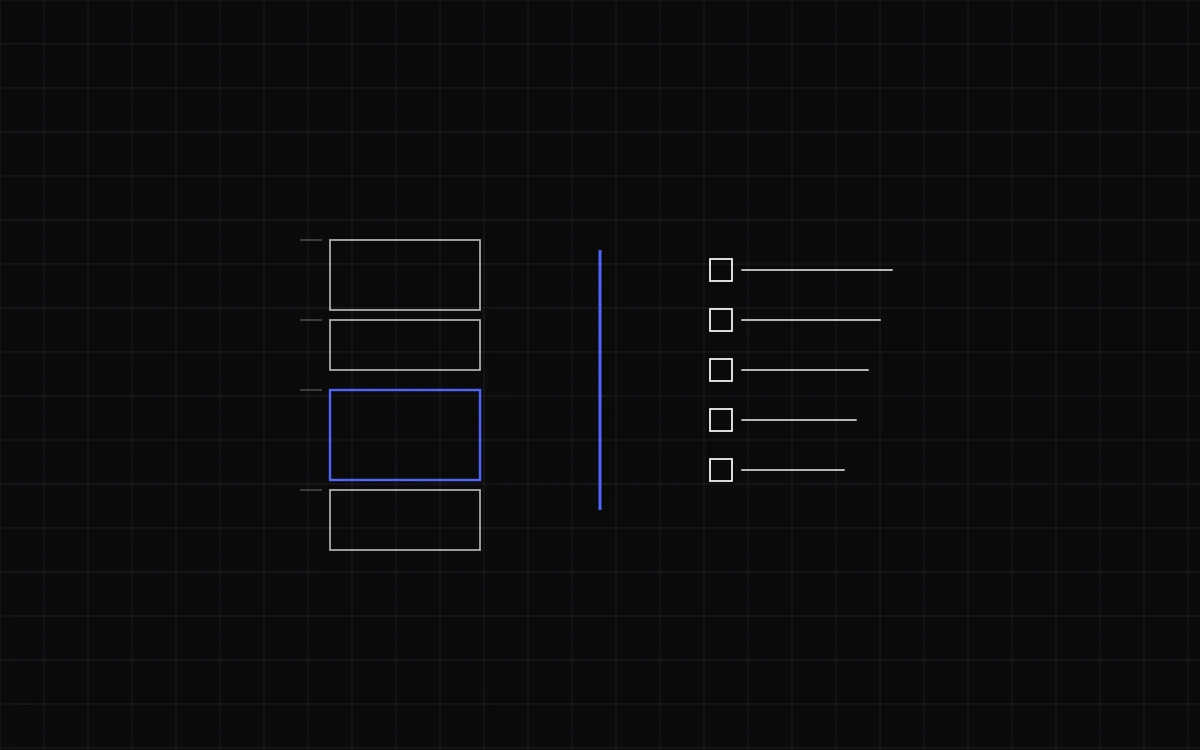
- A to-do list answers what to do; time blocking answers when to do it.
- Time blocking wins for deep, focused work and for exposing overcommitment.
- A plain list wins on unpredictable, interrupt-heavy days.
- The most reliable setup is a full list plus a light plan for your top two or three tasks.
- Vekto’s Today view runs as List, Plan, or Both, so you switch modes to fit the day.
Both methods promise a calmer day, but they fix different problems. Choosing time blocking vs a to-do list is less about which one wins and more about matching the tool to the day in front of you. A list captures everything you could do. A time block decides when one of those things actually gets your attention. This is an honest comparison: where each method shines, where each one falls apart, and how to pair a list with a light plan without turning your calendar into a second job.
What is the difference between time blocking and a to-do list?
A to-do list answers what you need to do. Time blocking answers when you will do it. A list is an open collection of tasks you tick off in any order, on your own timing. Time blocking assigns each task a slot on the calendar, so the day is roughly planned before it begins. Lists trade certainty for flexibility; blocks trade flexibility for commitment.
Neither is a personality test. Most people need the list to think clearly and the plan to act. The interesting question is when to lean on each, which is where the honest trade-offs begin.
Time blocking vs a to-do list: a side-by-side
Here is the practical comparison, stripped of hype. Read it as tendencies, not laws: a heavy list-user can still block one hour, and a devoted blocker can keep a scratch list on the side. The right call often changes by the day, and sometimes by the hour.
| Dimension | To-do list | Time blocking |
|---|---|---|
| What it answers | What to do next | When each task happens |
| Best for | Capturing and remembering | Protecting focus and finishing |
| Biggest strength | Flexible, fast to update | Forces honest time estimates |
| Where it fails | Grows endless, hides overload | Cracks when the day is interrupted |
| Interruptions | Absorbs them easily | Needs re-planning |
| Overcommitment | Stays hidden | Becomes obvious |
| Daily setup | Almost none | Five to ten minutes |
When does time blocking actually help?
Time blocking earns its keep when focus is scarce and the work is deep. Assigning a task a start time removes the constant what-now decision and makes procrastination harder, because the slot is already spoken for. It also exposes overcommitment: you can fit three or four real deep blocks in a day, not twenty-seven list items.
The research on switching backs this up. Psychologist David Meyer’s work, summarized by the American Psychological Association, found that toggling between tasks can cost as much as 40 percent of someone’s productive time. Gloria Mark’s research at UC Irvine clocked an average of about 23 minutes to fully refocus after a single interruption, and researcher Sophie Leroy named the lingering fog attention residue: part of your head stays on the last task instead of moving cleanly to the next. A block is simply a fence around one task so that residue never builds. It also fights two quiet enemies: the planning fallacy, our habit of underestimating how long things take, and Parkinson’s law, where work expands to fill whatever time you give it.
Reach for time blocking when you:
- Have long, cognitively heavy work like writing, coding, studying, or design.
- Keep running out of day despite a full list.
- Chronically underestimate how long tasks take (the planning fallacy).
- Want to protect one deep-work window from meetings and pings.
When is a plain to-do list better?
A plain list wins when the day is unpredictable or the tasks are small. If your work is reactive (support, parenting, on-call), a schedule you drew at 8am is obsolete by 9am, and re-blocking all day costs more than it saves. A list bends where a rigid plan snaps.
Stick with a simple list when you:
- Face lots of short, interchangeable tasks with no fixed order.
- Get interrupted constantly and cannot defend a block.
- Feel that a full calendar creates pressure rather than calm.
- Just need to capture and prioritize the tasks before deciding anything else.
Lists have one honest weakness worth naming: they hide overload. Twenty items look the same on paper whether they need two hours or two days, which is exactly the gap a light plan closes. The fix is not more discipline; it is adding a little structure to the few tasks that carry the day.
How do you combine a list and a light plan?
The most reliable setup is not either method at full strength. It is a complete list plus a light plan for the two or three things that truly matter today. You keep the flexibility of a list and borrow just enough commitment from blocking to protect what counts.
A list tells you what matters. A plan tells you when it happens. People who feel in control usually keep both, not one done perfectly.
A simple daily rhythm:
- Brain-dump every task into one list so nothing lives in your head.
- Pick the day’s top three and be ruthless, because everything else is optional.
- Give only those three a rough time or order, not the whole day.
- Leave open buffer for the interruptions you know are coming.
- At day’s end, carry anything unfinished forward and reset tomorrow.
This is the thinking behind Vekto’s Today view, which offers List, Plan, or Both, so you can switch modes as the day demands instead of committing to one philosophy. On chaotic days you stay in List; on deep-work days you add a light Plan; and its open-from-yesterday mechanic carries unfinished to-dos into today so nothing quietly disappears. You can capture a task in plain language, typing something like “Call Anna tomorrow 14:30”, so the list never slows you down. And if you would rather decide the night before, planning tomorrow tonight makes the morning almost decision-free.
Try both for a week. Run a pure list for a few days, add two blocks for a few more, and keep whatever leaves you calmer at 6pm. Do not chase the perfect system. The method that fits your real days, not your ideal ones, is the one that actually works.
Is time blocking better than a to-do list?
Neither is universally better. Time blocking wins for deep, focused work and for people who overrun their days, because it forces honest time estimates. A to-do list wins on unpredictable, interrupt-heavy days. Most people get the best result by combining a full list with a light plan for their top tasks.
What are the disadvantages of time blocking?
Time blocking breaks when your day is interrupted, since one delay pushes every later block. It takes five to ten minutes of daily setup, can feel rigid or stressful, and tempts you to over-plan. It suits deep, predictable work far better than reactive or on-call days.
Can you use time blocking and a to-do list together?
Yes, and it is the most reliable setup. Keep one complete list so nothing is forgotten, then give only your top two or three tasks a rough time slot. You keep a list’s flexibility while borrowing just enough commitment from blocking to protect what actually matters.
What is the difference between time blocking and timeboxing?
Time blocking reserves a slot for a type of work, such as 9 to 11am for writing. Timeboxing sets a fixed limit for one task and stops when time is up, such as 30 minutes on a report. Blocking protects focus; timeboxing caps effort and fights perfectionism. Many people use both.
Why do to-do lists stop working?
To-do lists fail when they grow endless and hide overload, since twenty items look identical whether they need two hours or two days. Without any sense of when tasks happen, the hardest ones drift from day to day. Adding a light plan for the top few tasks fixes most of it.
- American Psychological Association, Multitasking: Switching costs (research by Rubinstein, Evans, and Meyer) www.apa.org
- Gloria Mark, Daniela Gudith, and Ulrich Klocke, The Cost of Interrupted Work: More Speed and Stress (ACM CHI 2008) www.ics.uci.edu
- Sophie Leroy, Why Is It So Hard to Do My Work? The Challenge of Attention Residue When Switching Between Work Tasks (Organizational Behavior and Human Decision Processes, 2009) ideas.repec.org
Founder of Vekto. Writes about calm planning, goals and the loop between them.